
Enterprise Software Modernization
Transform legacy applications into modern, cloud-native solutions. We migrate monolithic systems to microservices, upgrade outdated technology stacks, and implement cloud-native architectures—reducing costs, improving agility, and enhancing security.
Modernize Your Systems

Comprehensive Modernization Services
End-to-end enterprise application transformation and technology upgrades

Legacy Application Assessment & Strategy
Comprehensive evaluation of your legacy applications to determine the optimal modernization strategy. We analyze technical debt, business criticality, integration complexity, and ROI to create a prioritized modernization roadmap identifying which applications should be retired, replaced, rehosted, replatformed, refactored, or rebuilt—delivering strategic transformation plans that maximize business value.

Technical Debt Analysis
Comprehensive code quality analysis using static analysis tools identifying code smells, security vulnerabilities, and performance bottlenecks. Measure technical debt in person-days, analyze outdated dependencies, evaluate architectural anti-patterns, and generate heatmaps showing highest-risk areas.

Business Impact Assessment
Evaluate application business criticality through stakeholder interviews understanding business processes, user base, revenue impact, and regulatory requirements. Classify applications as mission-critical, business-critical, supporting, or non-essential for prioritization.

6 R's Modernization Strategy
Apply the 6 R's framework: Retire (decommission unused apps), Retain (keep as-is), Rehost (lift-and-shift), Replatform (minimal optimization), Refactor (optimize architecture), Rebuild (redevelop). Document rationale with cost-benefit analysis for each decision.
Modernization Roadmap Development
Create phased 12-36 month roadmap balancing quick wins with strategic transformations. Define Phase 1 (Quick Wins), Phase 2 (Strategic Initiatives), Phase 3 (Optimization) with success criteria, KPIs, resources, budgets, and risk mitigation plans.

ROI & Cost-Benefit Analysis
Quantify modernization benefits including reduced infrastructure costs, improved developer productivity, faster time-to-market, and enhanced security. Calculate total cost of ownership for current vs. modernized state with payback period analysis.

Stakeholder Alignment & Change Management
Build consensus across stakeholders through workshops, demonstrations, and incremental value delivery. Establish governance with steering committees, architecture review boards, and change management processes ensuring organizational readiness.

Microservices Architecture Migration
Transform monolithic applications into scalable microservices architectures enabling independent deployment, technology diversity, and team autonomy. We design domain-driven microservices, implement API gateways, set up service mesh, and establish DevOps practices—minimizing business disruption through incremental decomposition strategies that maintain system reliability throughout the transformation.

Domain-Driven Design & Service Decomposition
Apply DDD principles identifying bounded contexts, aggregates, and domain entities for service boundaries. Conduct Event Storming workshops mapping business processes. Use strangler fig pattern gradually replacing monolith functionality while keeping system operational.

API Gateway & Service Communication
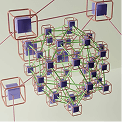
Implement API Gateway (Kong, AWS API Gateway, Apigee) as single entry point providing routing, authentication, rate limiting, and transformation. Design RESTful APIs, GraphQL, or gRPC. Implement circuit breakers, retries, and service discovery.

Data Management & Eventual Consistency
Implement database-per-service pattern for autonomy. Handle distributed transactions using Saga pattern. Implement event sourcing and CQRS for scalability. Synchronize data through domain events with Kafka or RabbitMQ ensuring consistency.

Service Mesh & Observability
Deploy service mesh (Istio, Linkerd) providing service-to-service communication, mutual TLS security, traffic management, and observability. Implement distributed tracing with Jaeger, centralize logging, monitor with Prometheus and Grafana.
Independent Deployment & CI/CD
Enable independent service deployments with dedicated CI/CD pipelines for each microservice. Implement blue-green deployments, canary releases, and feature flags. Use containerization ensuring consistent deployment across environments.

Resilience & Fault Tolerance
Build resilient microservices with circuit breakers, bulkheads, retries, and timeouts preventing cascade failures. Implement health checks, graceful degradation, and chaos engineering testing system resilience under failure conditions.
Cloud-Native Application Development
Build modern cloud-native applications leveraging cloud platforms' full potential with containers, serverless computing, managed services, and cloud-native patterns. We design applications for elasticity, resilience, and portability using 12-factor app principles—reducing operational overhead while maximizing scalability, cost-efficiency, and developer productivity in multi-cloud environments.

Containerization & Kubernetes
Package applications as Docker containers with optimized Dockerfiles using multi-stage builds and minimal base images. Deploy on Kubernetes (EKS, AKS, GKE) for orchestration, auto-scaling, self-healing, and rolling updates with Helm charts.


Serverless Architecture
Build event-driven serverless applications using AWS Lambda, Azure Functions, or Google Cloud Functions eliminating server management. Use managed services for databases, queues, and storage. Implement serverless workflows with Step Functions.

12-Factor App Principles
Apply 12-factor methodology: store config in environment variables, declare dependencies explicitly, treat backing services as attached resources, separate build/release/run stages, execute as stateless processes, and treat logs as event streams.

Cloud-Managed Services Integration
Leverage cloud-managed services: use RDS instead of self-managed databases, ElastiCache for caching, SNS/SQS for messaging, S3 for storage, CloudFront for CDN. Integrate AI services, ML platforms, and multi-region architectures.

Infrastructure as Code (IaC)
Define infrastructure using code with Terraform, CloudFormation, or Pulumi enabling version control, reproducibility, and automation. Implement GitOps workflows for infrastructure deployment with automated testing and validation.

Multi-Cloud & Hybrid Strategies
Design portable applications running across AWS, Azure, and GCP avoiding vendor lock-in. Implement hybrid architectures connecting on-premises systems with cloud using VPN, Direct Connect, or ExpressRoute for seamless integration.

Technology Stack Modernization
Upgrade outdated technology stacks to modern frameworks, languages, and platforms improving developer productivity, security, and performance. We migrate from legacy technologies (COBOL, mainframes, classic ASP) to modern stacks (Java Spring Boot, .NET Core, Node.js, Python, React, Angular)—using structured migration approach with training, code conversion, and parallel running ensuring successful transitions.

Modern Framework Migration
Migrate from legacy frameworks to modern alternatives: Java EE to Spring Boot, ASP.NET Framework to .NET Core, AngularJS to React/Vue. Adopt RESTful APIs replacing SOAP, use JSON over XML, implement SPA architecture for better UX.

Language & Platform Upgrades
Upgrade programming languages: Java 8 to Java 17/21, Python 2 to Python 3, PHP 5 to PHP 8, .NET Framework to .NET 6/7/8. Migrate databases from on-premises to cloud-managed services. Replace proprietary middleware with open-source.
Frontend Modernization
Transform legacy frontends (JSP, ASP, PHP) into modern SPAs using React, Angular, or Vue. Implement component-based architecture, state management, responsive design, PWA capabilities, and accessibility standards (WCAG).

API Modernization
Transform legacy integration to API-first architecture: migrate SOAP to RESTful APIs with JSON, implement GraphQL for flexible queries, use gRPC for high-performance communication. Apply API design best practices, security, and documentation.
Database Modernization
Migrate from legacy databases to modern platforms: Oracle to PostgreSQL, SQL Server to cloud-managed databases, NoSQL for unstructured data. Implement data migration strategies, schema optimization, and query performance tuning.
Build & Deployment Modernization
Upgrade build tools from Ant/Maven to Gradle, implement modern CI/CD pipelines with Jenkins, GitHub Actions, or GitLab CI. Use containerization for consistent deployment, implement automated testing, and continuous delivery.
Why Modernize Your Enterprise Software?
Reduced Costs
70% operational cost reduction
 Lower infrastructure costs
- Reduced maintenance overhead
- Eliminated legacy licensing
- Improved resource utilization
Faster Innovation
5x faster feature delivery
- Modern development tools
- CI/CD automation
- Microservices agility
- Cloud scalability
Enhanced Security
Enterprise-grade protection
- Modern security patches
- Compliance frameworks
- Automated security scanning
- Zero-trust architecture
Cloud Benefits
Full cloud potential
- Elastic scaling
- Global availability
- Managed services
- Disaster recovery
Ready to Modernize Your Legacy Systems?
Transform outdated applications into modern, scalable, cloud-native solutions.
