SaaS vs Traditional Software
SaaS vs Traditional Software: Key Differences Explained
Choosing the right software model can directly affect your business's cost, scalability, maintenance, and long-term flexibility. SaaS vs traditional software is essentially a comparison between cloud-based applications delivered through the internet and software that is installed and managed on local infrastructure. The knowledge of differences in models helps to make a reasonable choice regarding the technology investment.
What is SaaS?
Software as a Service is a model of cloud-based software delivery in which applications are hosted by the provider and are accessible via the Internet. Users usually pay for the subscription instead of installing and managing all the software infrastructure on their own.
With SaaS, the provider will normally manage the hosting, update, maintenance, and infrastructure. This makes it possible for a firm interested in SaaS to have easier deployment, access, and scalability of their software.
What is Traditional Software?
Traditional software is commonly purchased or licensed and installed directly on a company's computers or private servers. The organization will typically be the one that installs, maintains, and takes care of the updates and technical issues.
This model may offer more control over the software environment and data, and thus suits firms with certain customization or infrastructure needs.
SaaS vs Traditional Software: What’s the Difference?
The key SaaS vs traditional software differences are related to deployment, ownership, maintenance, accessibility, and cost.
In simple terms, the difference basically involves how software is managed and delivered.
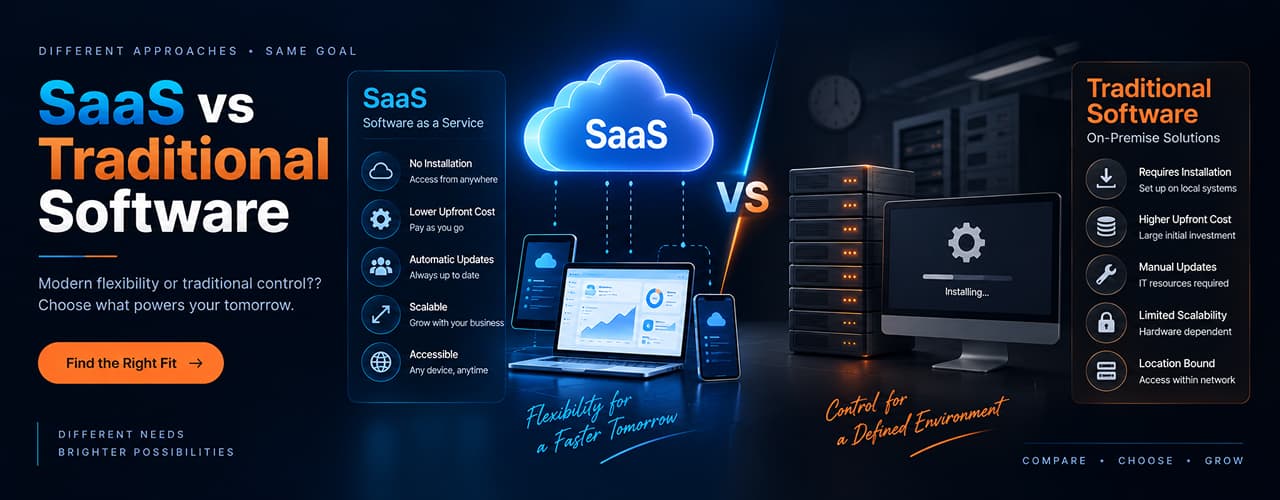
- SaaS deployment is cloud-based, while traditional software is installed on Local or private infrastructure.
- SaaS is subscription-based, while traditional software is usually purchased with a one-time license and infrastructure costs.
- SaaS is maintained and updated by the provider, while traditional software is maintained by the organization.
- SaaS updates are automatic, while traditional software updates may require manual installation.
- SaaS is accessible from anywhere with an internet connection, while traditional software may be limited to specific devices or networks.
- SaaS is scalable based on subscription plans, while traditional software may require additional hardware or licenses for scaling.
- SaaS has less infrastructure management, while traditional software has greater environment control and customization.
SaaS vs Traditional Software: Pros and Cons
Both options are viable depending on what is needed by the organization. The right choice depends on factors such as budget, technical resources, security requirements, customization needs, and growth plans.
What are the Advantages of SaaS Over Traditional Software?
For growing companies, traditional software vs SaaS is normally compared on the basis of IT management requirements by the organization.
The main advantages of SaaS vs traditional software include:
- Faster deployment: SaaS applications can often be started without lengthy infrastructure setup.
- Lower upfront investment: Subscription pricing can reduce large initial software and infrastructure expenses.
- Simpler maintenance: Updates, hosting, and infrastructure management are generally handled by the provider.
- Better accessibility: Teams can typically access applications from supported devices with an internet connection.
- Scalability: Businesses can often adjust users or service levels as their requirements change.
What are the Limitations of SaaS and Traditional Software?
SaaS will depend on access to the internet, availability of the provider, cost of the subscription, and external infrastructure facilities. Organizations should also consider their data security, integration ability, service level agreement, and vendor policies before choosing any SaaS provider.
Traditional software might have higher initial costs and might demand greater technical effort from within. Organizations might have to upgrade, back up, and maintain the software.
Common SaaS vs traditional software examples include cloud-based solutions for CRM, accounting, collaboration, and project management systems.
Which is Better: SaaS or Traditional Software?
A universal solution does not exist either. Software as a Service is a good choice for companies focused on accessibility, speed of implementation, scalability and low infrastructure management. The use of traditional software is better when there is a need for high control, customization and certain infrastructure settings.
The difference between SaaS and traditional software is ultimately about the delivery and management model rather than simply whether one technology is newer.
For organizations modernizing their technology environment, choosing the right software architecture is critical for efficiency and future digital growth. SaaS vs traditional software should be evaluated according to business objectives, technical requirements, and expected future needs rather than following a one-size-fits-all approach.
When evaluating SaaS vs traditional software, businesses should consider:
- Total cost of ownership
- Security and compliance requirements
- Scalability and future growth
- Customization and integration needs
- Internal IT capabilities
- Data and infrastructure control
FAQs
1. What is the difference between SaaS and traditional software?
SaaS runs on the cloud and can be accessed online, whereas traditional software is often installed and controlled locally.
2. Is SaaS better than traditional software?
SaaS can be better for businesses which require scalability, easier accessibility, rapid deployment, and less infrastructure control.
3. Is traditional software more secure than SaaS?
Not necessarily. Security depends on the software, infrastructure, configuration, and security practices used by the provider or organization.
4. Can SaaS replace traditional software?
Yes, SaaS is capable of replacing traditional software in many applications, although some organizations may require locally-managed systems.
5. What is the difference between SaaS and on-premise software?
SaaS is hosted and managed by a service provider, while on-premise software is installed and managed by the company itself.
