
Low Code vs No Code Development – What’s the Difference?
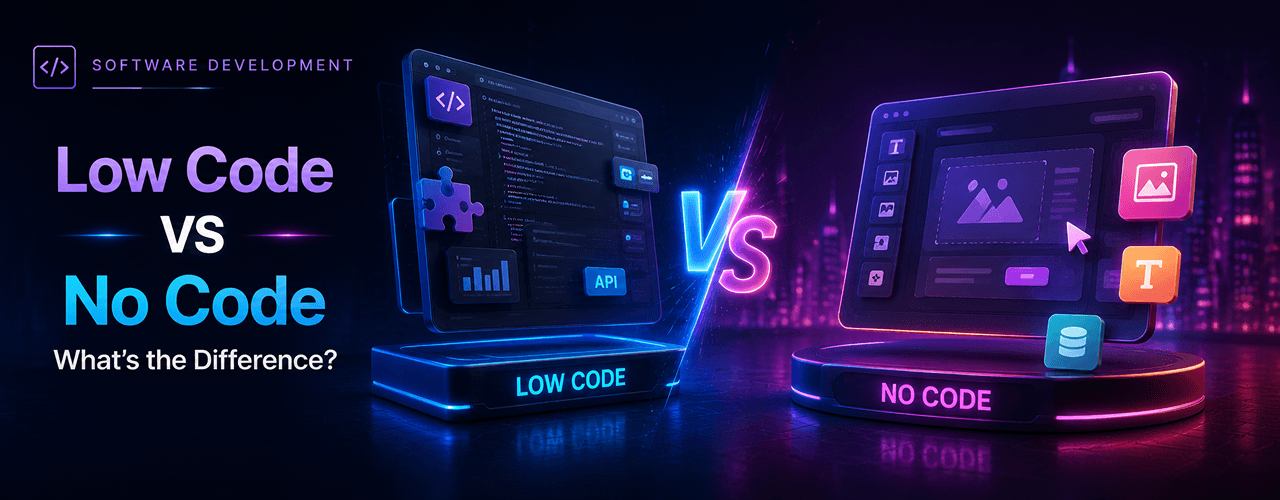
In today’s fast-paced digital generation businesses and individuals are constantly seeking ways to streamline their development processes and bring innovative ideas to life more efficiently.
This pursuit has led to the emergence of two popular trends in the software development industry: low code and no code development. These approaches leverage visual interfaces and pre-built components for facilitating rapid application development without the need for extensive coding knowledge.
Understanding Low Code Development
Low code development is a software development approach that emphasizes visual interfaces and drag-and-drop functionality to streamline the application development process.
It enables developers to create complex applications by using a set of pre-built components, integrating various services and systems, and configuring logic through visual tools, all while minimizing the need for manual coding.
Understanding No – Code Development
No code development takes the concept of low code a step further by eliminating the need for manual coding or scripting. These platforms focus on providing a simple and intuitive interface that allows users to create applications using visual tools and configurations, without writing a single line of code.
No-code platforms typically offer a range of templates, pre-built modules, and connectors that users can combine to build functional applications.
Why Is The Low Code Development Approach Useful?
- Increased Speed
- Agility and Flexibility
- Collaboration and Accessibility
- Bridging the Skills Gap
How Effective Is No – Code Development Approach?
- Accessibility and Empowerment
- Rapid Prototyping
- Cost-Effectiveness
- Iterative Development
Final Words
Whether you opt for low code or no code, the choice ultimately depends on your specific needs, project requirements, and available resources.
Regardless of the approach, both methods empower users to innovate, iterate rapidly, and deliver valuable software solutions in a fraction of the time traditionally required.
