Knowledge Management System
Smart Knowledge Management System Solutions
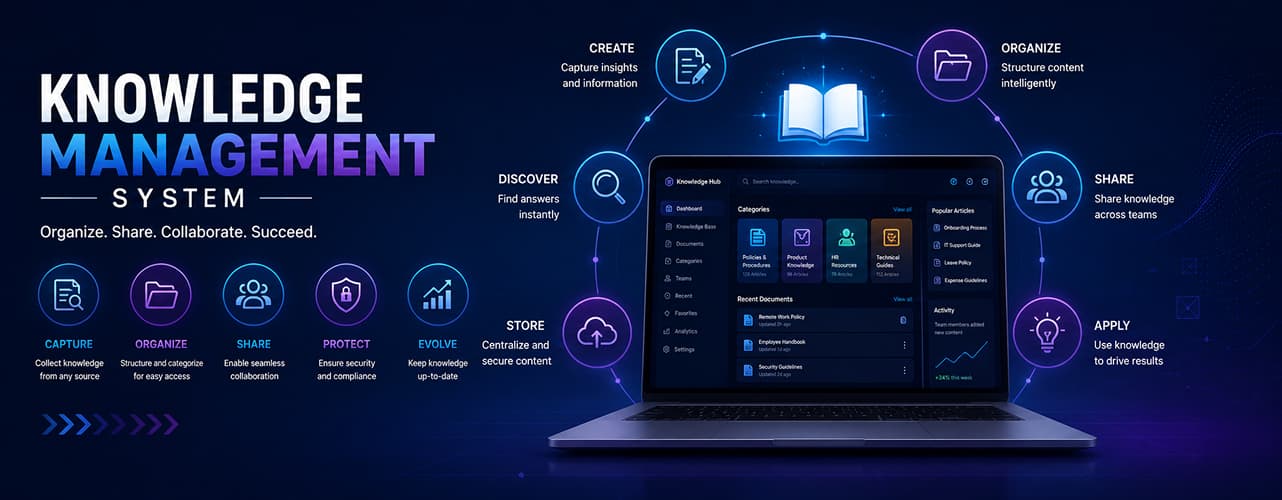
Organizations generate massive amounts of information every day. However, in the absence of an organized method of storing and sharing information, it is possible for important knowledge to be lost. A Knowledge Management System can help organizations manage and distribute information, and ensure that people get the necessary information whenever it is needed.
What is Knowledge Management System?
Knowledge Management Systems are central systems through which organizations manage, store, and share their knowledge. Through such systems, it is easy for employees to locate documents, procedures, processes, training materials, best practices, etc.
Such systems allow organizations to maintain access to their information as they increase in size.
Why Businesses Need a Knowledge Management System
As organizations grow, information gets spread out in emails, cloud storage, spreadsheets, and instant messaging tools. A knowledge management system solves this issue by providing one source of truth.
All these benefits can be used by organizations to make wise business decisions.
Key business benefits include:
- Improved access to information
- Increased productivity of employees
- Collaboration among teams
- Quality customer service
- Shortened onboarding process
- Prevention of knowledge leakage
- Compliance and proper documentation
Key Features of an Effective Knowledge Management System
A modern knowledge management system must have capabilities for making information management easy while facilitating business expansion.
Centralized Knowledge Repository
All documents, manuals, SOPs, FAQs, videos, and training material must be stored in one place.
Powerful Search Functionality
Advanced search capabilities make it easy for people to access relevant information in seconds with the help of key words, filters, and categories.
Role-Based Access Control
Access to certain information is required by different departments. Proper permissions ensure security of business information.
Version Control
Manage document versions so that people can always access the updated information.
Collaboration Tools
Make it easy for people to collaborate on content creation, editing, and sharing.
Knowledge Management System Development: What Businesses Should Know
Proper knowledge management system development begins with comprehending organizational goals, processes, and needs. No two businesses use information in the same way, which means customization is often required.
Working with experienced development teams ensures scalability, security, and long-term performance.
The knowledge management system development process typically includes:
- Analysis of business requirements
- Planning of information architecture
- User interface/user experience (UI/UX) design
- Designing a database
- Development of the system
- Integration with other business systems
- Implementation of security measures
- Testing and deployment of the solution
- Ongoing maintenance and optimization
How to Develop a Knowledge Management System
Many organizations want to know how to develop a knowledge management system project that matches the organization.
The first step is identifying knowledge sources across departments. The next step involves the logical classification of the information as well as defining the roles of the users.
Other factors include the choice of technology that supports searching, collaboration, and analytics.
Best Practices to Develop Knowledge Management System Successfully
Businesses planning to develop knowledge management system need to concentrate as much on users as on technologies.
With a proper implementation, the platform will become a useful tool rather than just another business application.
- Know your workflows
- Make sure that there is logic in the content organization
- Have consistent documentations standards
- Keep track of obsolete information
- Promote knowledge exchange between people
- Monitor users' activity
What Is the Difference Between Knowledge Management and a Knowledge Management System?
Knowledge management refers to the entire business strategy of managing knowledge within the organization. The knowledge management system refers to the technological infrastructure used in implementing such a knowledge management strategy.
The ability to understand the difference between knowledge management and the knowledge management system is vital for the organization.
FAQs
1. What is a knowledge management system?
Knowledge Management System is software which helps to manage, store and share organizational knowledge from a centralized place.
2. Which businesses benefit from a knowledge management system?
Startups, SMEs, Enterprises, Healthcare organizations, Education, Finance, Manufacturing & IT companies have been gaining advantage through knowledge management systems working centrally.
3. What are the essential features of a knowledge management system?
Basic components of KMS include document management, search, role-based permissions, version control, collaboration and analytics.
4. How long does knowledge management system development take?
Timeline varies according to the project complexity, integration and customizations needed. Enterprise-level implementation normally takes weeks or months.
