
How to Build AI Infrastructure
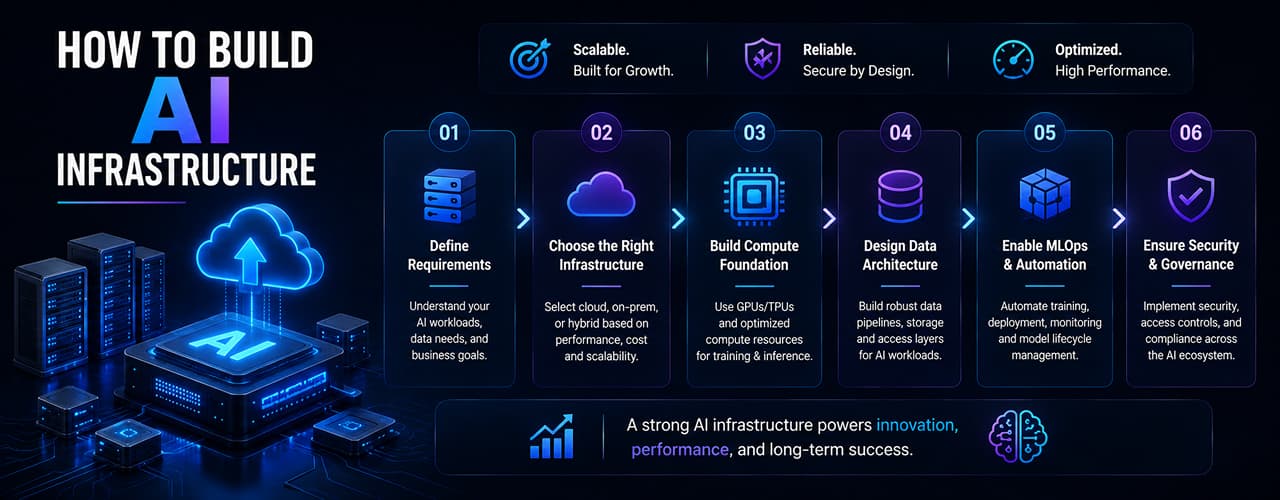
How to Build AI Infrastructure: Guide for Modern Businesses
Artificial Intelligence is becoming a key driver of digital transformation across industries. The adoption of AI technologies by businesses brings automation, decision-making, better customer experience, and product innovation. However, successful AI adoption requires more than just choosing the right AI algorithm. Organizations must have an enabling framework to process data, deliver computing capacity, and ensure security.Understanding how to build AI infrastructure makes it possible for organizations to create a stable environment for the performance of AI applications. This makes it possible for the organization to be able to develop, train, and implement their AI solutions and prepare for technological needs in the future.
What is AI Infrastructure and Why Does it Matter?
AI infrastructure is the foundation that helps businesses develop, train, and run artificial intelligence applications. Many organizations explore how to build AI infrastructure because they require automation, analysis, and robust AI-based solutions.
A strong AI environment combines hardware, software, data systems, and cloud resources. Learning about AI infrastructure enables organizations to develop technology for existing needs and for future potential as well.
Key Components of AI Infrastructure
The components of AI infrastructure must be known before starting an AI initiative. These components act together and assist in data processing, building models, and running AI smoothly.
1. AI Hardware and Computing Resources
Computing power plays a major role in AI projects. An organization must have proper processors, GPUs, and other resources according to its AI needs. The right AI infrastructure components allow for effective workload management without wasting money.
2. Data Storage and Data Management Systems
Quality data is essential for successful AI applications. Organizations must establish proper storage mechanisms that provide easy data access and processing.
3. AI Frameworks and Development Tools
Developers use frameworks and tools to create, test, and improve AI models. Choosing the best AI infrastructure tools can simplify development and help teams build reliable AI solutions.
4. Cloud Infrastructure for AI Workloads
Cloud platforms provide flexibility, scalability, and cost control for AI operations. Many businesses use AI infrastructure solutions to deal with the varying loads without having to spend lots on hardware.
5. Machine Learning Models and Deployment Platforms
Once the models are designed, organizations require the platforms to deploy and track them properly. The right strategy on how to create AI infrastructure to train LLMS is what is needed here.
Step-by-Step Process to Build AI Infrastructure
Businesses often ask how to build AI infrastructure when planning their AI journey. The process becomes easier when divided into clear steps.
1. Define AI Goals and Business Requirements
Start by identifying the problems AI should solve. Clear objectives help businesses select suitable technologies and avoid unnecessary complexity.
2. Prepare and Organize Data Pipelines
Data pipelines should collect, clean, and manage information efficiently. Well-prepared data improves model performance and reduces operational issues.
3. Choose the Right AI Technology Stack
Select frameworks, cloud services, databases, and deployment tools based on business goals. The technology stack should support both current projects and future expansion.
4. Build Scalable Computing Infrastructure
Organizations should focus on flexible resources that can grow with demand. A scalable setup makes it easier to handle increasing AI workloads.
5. Deploy and Monitor AI Models
Regular monitoring helps maintain accuracy, security, and performance. Businesses should update models when requirements or data patterns change.
Best Practices for Building Scalable AI Infrastructure
Organizations planning how to build AI infrastructure should focus on scalability, security, and long-term management. Using automation, proper data governance, and continuous monitoring can improve reliability.
A thoughtful approach to build AI infrastructure also helps reduce maintenance challenges and supports better business outcomes.
Conclusion
AI is becoming an important technology for businesses looking to improve efficiency, automation, and decision-making. A strong foundation is necessary to successfully develop and deploy AI applications. Learning how to build AI infrastructure helps organizations understand all the necessary technology and processes behind effective AI deployment.
With the proper focus and management strategies, a firm can come up with an effective AI solution that will aid its future growth. Centrelocus helps organizations develop modern AI solutions with the right infrastructure approach to meet evolving digital needs.
FAQs
1. What is AI infrastructure?
AI infrastructure refers to the hardware, software, data management systems, and cloud resources that facilitate companies in developing, training, deploying, and managing their AI applications.
2. Why is AI infrastructure important?
AI infrastructure helps businesses to efficiently execute AI applications by offering sufficient computing capabilities, data management, and scaling solutions.
3. How to build AI infrastructure?
To build AI infrastructure, businesses need computing resources, data storage systems, AI frameworks, cloud platforms, deployment tools, and proper monitoring systems.
4. What are the 5 levels of AI infrastructure?
The five major components of AI infrastructure are hardware resources, data management, AI software framework, cloud infrastructure, and AI deployment framework.
5. What software is required for AI infrastructure?
AI infrastructure commonly requires machine learning frameworks, data processing software, cloud platforms, model management software, and monitoring software.
