Android vs iOS App Development
Android vs iOS App Development: Which is Better?
Choosing between platforms affects development cost, launch speed, user reach, maintenance, and growth. Android vs iOS App Development is not simply a technology choice; it should match your audience, product goals, and resources. This guide compares the practical differences in technology, cost, security, performance, and user experience to help businesses make a confident decision.
What is Android App Development?
Android app development is the process of designing, building, testing, and maintaining applications for devices powered by Google’s Android operating system. The developers can utilize languages like Kotlin, along with Android Studio and Google’s own tools. The platform supports smartphones, tablets, TVs, cars, and other connected devices.
Its major advantage is market reach because Android runs across many brands and price ranges. However, developers have to be careful about various things like the different sizes of screens and operating system versions.
What is iOS App Development?
iOS app development focuses on applications for Apple devices such as iPhone and iPad. Swift is the primary modern programming language, while Xcode is Apple’s main development environment. The Apple-controlled software and hardware ecosystem makes the process of testing easier.
Businesses prefer iOS if they need to target users in the Apple universe, provide premium services, and adopt technologies from Apple. Guidelines for App Store further make it necessary.
Android and iOS: Key Differences
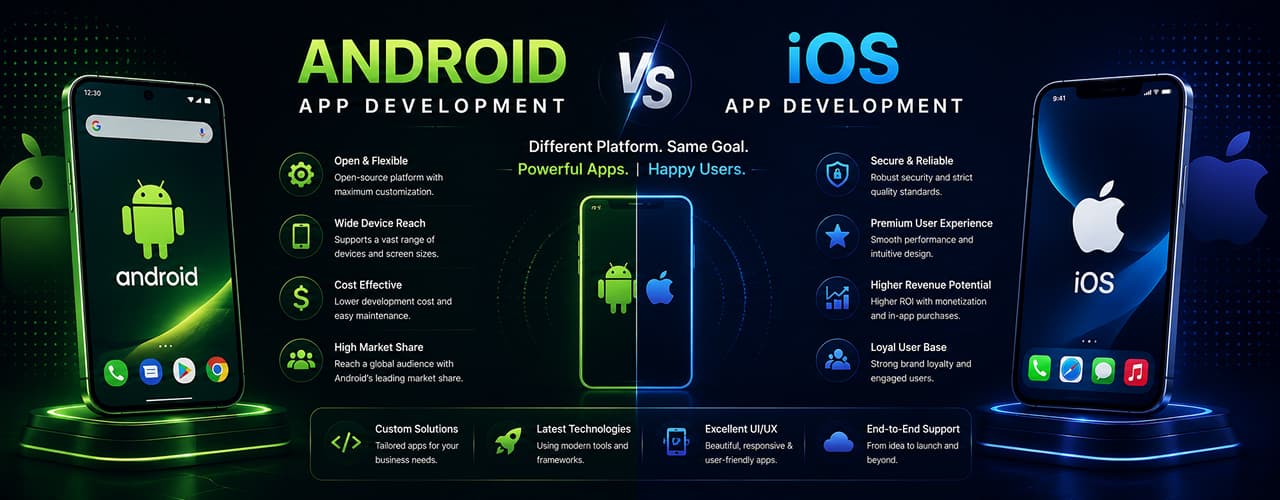
The key differences of the two platforms include platform openness, device diversity, development tools, distribution, and ecosystem control. Android allows for multiple manufacturers, whereas iOS is exclusive to Apple's devices. The Android applications are usually found on Google Play, whereas iOS apps have the App Store.
Android typically needs wider device testing, whereas iOS provides a more controlled environment. This difference is central to Android vs iOS App Development planning.
Android and iOS: Cost and Time
Development cost depends on features, design complexity, integrations, testing, backend services, and maintenance rather than platform alone. Android app development can require additional testing because of device and OS variation. iOS app development may have a more predictable testing scope because Apple controls its hardware ecosystem.
Android and iOS: Pros and Cons
- Android provides a wider market coverage, choice of devices, and customization.
- The major weaknesses include fragmentation of devices and a larger testing matrix.
- iOS provides a controlled ecosystem, consistent hardware standards, and strong integration with Apple services.
- Its limitations include a narrower hardware ecosystem and stricter platform policies.
Which is Better for Your Business: Android or iOS?
There is no universal answer to what is Android vs iOS because the best platform depends on business priorities. The Android vs iOS question should be answered using target users, regional demand, monetization, budget, and launch goals.
Choose Android when broad device reach and market coverage are major goals. Using iOS in case customers are mainly concentrated in the Apple ecosystem or a controlled environment is highly recommended. Android vs iOS App Development must begin with customer insights.
Conclusion
Android vs iOS App Development is best approached as a strategic decision rather than a simple technology comparison. Both platforms can support secure, scalable, high-quality mobile products when development follows sound engineering and user-focused practices. Android vs iOS App Development works best when technical decisions follow clear business evidence.
The right choice depends on your target audience, budget, features, timeline, and business goals. A clear platform strategy helps reduce development risks and create a better user experience. For expert guidance on choosing the right platform and building a scalable mobile application, Centrelocus can help turn your app idea into a reliable digital solution.
FAQs
1. What is the difference between Android and iOS app development?
Android development targets Android devices, while iOS development focuses on Apple devices using different tools, languages, and ecosystems.
2. Is Android or iOS better for app development?
Neither is universally better. The right choice depends upon the target audience, budget, required features, etc.
3. Which is easier Android or iOS development?
iOS development can be simpler because of the controlled ecosystem of both hardware and software by Apple.
4. Which is easier to develop, Android or iOS apps?
Both are manageable, but Android could need more device testing since it has more devices.
5. Can one app be developed for both Android and iOS?
Yes. Cross-platform technologies enable developers to create apps for both platforms from a common codebase.
